
Royal Mail Business Mail Price Rises
With price rises announced for October 2026, being able to deliver digitally has become more important than ever
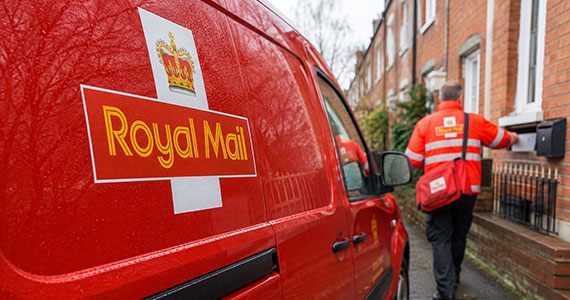
Royal Mail has announced significant increases to its wholesale postage prices, with new Access Mail tariffs coming into effect from 5 October 2026. The changes are particularly relevant to organisations sending large volumes of customer and administrative correspondence, including NHS trusts, local authorities, financial services organisations and other businesses that continue to rely heavily on physical mail. Across Royal Mail's Access Mail products, prices are reported to be increasing by an average of around 25%, while some Business Mail services face considerably larger increases. The cost of sending a Business Mail Economy letter weighing up to 100g, for example, is reported to be increasing by 36.1%.
Why are Royal Mail prices increasing?
Access Mail is widely used by organisations and mailing providers handling large quantities of post, with mail normally processed and sorted before being passed to Royal Mail for the final stage of delivery. Royal Mail has attributed the latest increases to the growing cost of maintaining its nationwide delivery network at a time when traditional letter volumes continue to fall. Access Mail volumes have reportedly declined from around 6.3 billion items in 2019/20 to approximately 4.2 billion today, while the number of addresses that Royal Mail must serve has continued to increase. Rising labour and fuel costs are also placing additional pressure on the cost of operating the postal network.
For organisations sending hundreds of thousands or even millions of letters each year, increases of this scale can have a significant impact on annual communication budgets. Postage is also only one part of the true cost of sending a physical document, as paper, printing, envelopes, inserting, sorting, handling and other production costs all need to be considered alongside the final delivery charge.
Does every document still need to be posted?
Physical mail continues to have an important role and, for some communications and recipients, will remain the most appropriate delivery method. However, the latest Royal Mail price increases provide another strong reason for organisations to review whether every document currently being printed and posted actually needs to be delivered physically. Appointments, statements, invoices, notifications, reminders, general correspondence and many other documents can increasingly be delivered electronically where appropriate and where the recipient's communication preferences allow it.
This is where a multi-channel communication solution such as Omnicomm can make a significant difference, enabling organisations to retain physical mail where it is required while moving suitable communications to lower-cost electronic delivery.
Reduce dependence on physical mail with Omnicomm
Omnicomm provides a single solution for producing and delivering customer and recipient communications through both physical and electronic channels. Rather than forcing an organisation to choose between traditional mail and digital communication, Omnicomm allows both to operate as part of the same communication process. Documents that need to be printed can continue to be produced and dispatched as physical mail, while suitable communications can instead be delivered by email or messaging.
This gives organisations the opportunity to progressively reduce the proportion of communications that incur printing and postage costs without abandoning physical mail altogether. If one recipient has chosen electronic correspondence, for example, Omnicomm can route their communication digitally, while another recipient receiving the same type of document can continue to receive a printed copy through the post. The greater the proportion of suitable correspondence moved to electronic delivery, the lower the organisation's exposure to future increases in postage and physical mail production costs.
Work with the systems you already use
Moving towards electronic communication should not require staff to operate an entirely separate process or replace the systems they already rely on. Omnicomm can integrate with existing business and document-producing systems, allowing organisations to continue producing correspondence through their established applications while Omnicomm manages how each communication is processed and delivered.
For organisations such as NHS trusts and local authorities, where high volumes of correspondence may originate from multiple departmental and specialist systems, this can provide a common communication layer through which documents are routed to the appropriate physical or electronic delivery channel. Businesses can achieve the same result with invoices, statements, customer letters, supplier correspondence and other routinely generated documents.
A gradual move to digital rather than an all-or-nothing decision
Digital transformation does not mean that physical mail has to disappear. Some recipients prefer printed correspondence, others may not have reliable access to digital services, and certain documents or circumstances may make physical delivery preferable. The advantage of Omnicomm is that organisations can use the most appropriate delivery method for each communication and recipient, rather than applying a single approach to everyone.
This creates an opportunity to make a controlled transition from physical to electronic delivery, retaining traditional mail where it adds value or remains necessary while removing printing and postage costs where it does not. It also allows organisations to increase their use of digital delivery over time, rather than attempting to move all communications away from physical mail in a single step.
Take control of rising communication costs
Royal Mail's October 2026 price changes demonstrate that the cost of relying heavily on physical correspondence is becoming increasingly difficult to predict. Royal Mail will remain an important part of the communication mix, but organisations sending substantial quantities of mail should now be looking more closely at where electronic delivery can reduce unnecessary dependence on postage.
By bringing physical mail, email and messaging together within a single communication solution, Omnicomm gives organisations greater control over how their communications are delivered and over the costs associated with delivering them. With some Business Mail prices increasing by more than a third from October, there has rarely been a stronger financial incentive to review how much of your organisation's correspondence really needs to go through the post.
If you are interested in using Omnicomm to increase digital delivery and reduce postage costs, please contact us now.